About Nam Nguyen, MSc, MBA
When Nam became a father, the questions he had spent years exploring in psychology, neuroscience, and strategy suddenly became personal. How do people become who they are? What shapes the way they think, behave, and eventually lead?
Parenthood pushed him toward an even bigger question: what happens when the way we raise children is repeated across millions of families and generations?
Today, that question sits at the heart of his writing. Nam explores childhood and parenting not only as family matters, but as forces that shape culture, institutions, leadership—and ultimately civilization.


Scientist by Training & Strategist by Trade
Nam began his career studying psychology and neuroscience at the Université de Montréal, where he spent several years researching visual attention and cognition. His work contributed to peer-reviewed research published in journals including NeuroImage and Frontiers in Systems Neuroscience.
Eventually, he became just as interested in what happens outside the brain. Why do organizations make the decisions they do? How do institutions shape behaviour? And why can a room full of very intelligent people still make a spectacularly questionable decision?
So Nam earned an MBA and moved into business strategy. Today, he advises senior leaders on strategy, risk, governance, performance, and complex decisions, while also contributing to board governance in Québec’s health and social-services system.
He may have moved from the laboratory to the boardroom, but the underlying question has remained remarkably similar: What shapes the way people think, act, and ultimately build the world around them?
Academic Background
Master’s Degree in Neuroscience from the Université de Montréal (2019)
Master’s in Business Administration from Université du Québec à Montréal (2019)
Bachelor’s Degree in Psychology from the Université de Montréal (2012)
Nam’s training across psychology, neuroscience, and business gives him an interdisciplinary lens on human behaviour—from how individuals think and develop to how organizations and societies shape them.
Strategic & Governance Expertise
Nam works in strategy, risk, and governance, advising senior leaders on complex decisions and organizational performance. He also serves in board governance within Québec’s health and social-services system.
This experience gives him a practical perspective on how institutions, incentives, and decisions shape people—and the societies they build.
Life & Family
Nam lives in Québec, Canada, with his wife and their two sons. Fatherhood is a major inspiration for his writing—and a useful reminder that theories about human behaviour rarely survive bedtime intact.
When he isn’t writing or working, he spends much of his time with his family and collecting new questions from two very energetic research assistants.
One question, explored from different angles
My books began with parenting, but the question behind them has always been larger: how do we shape the people our children become?
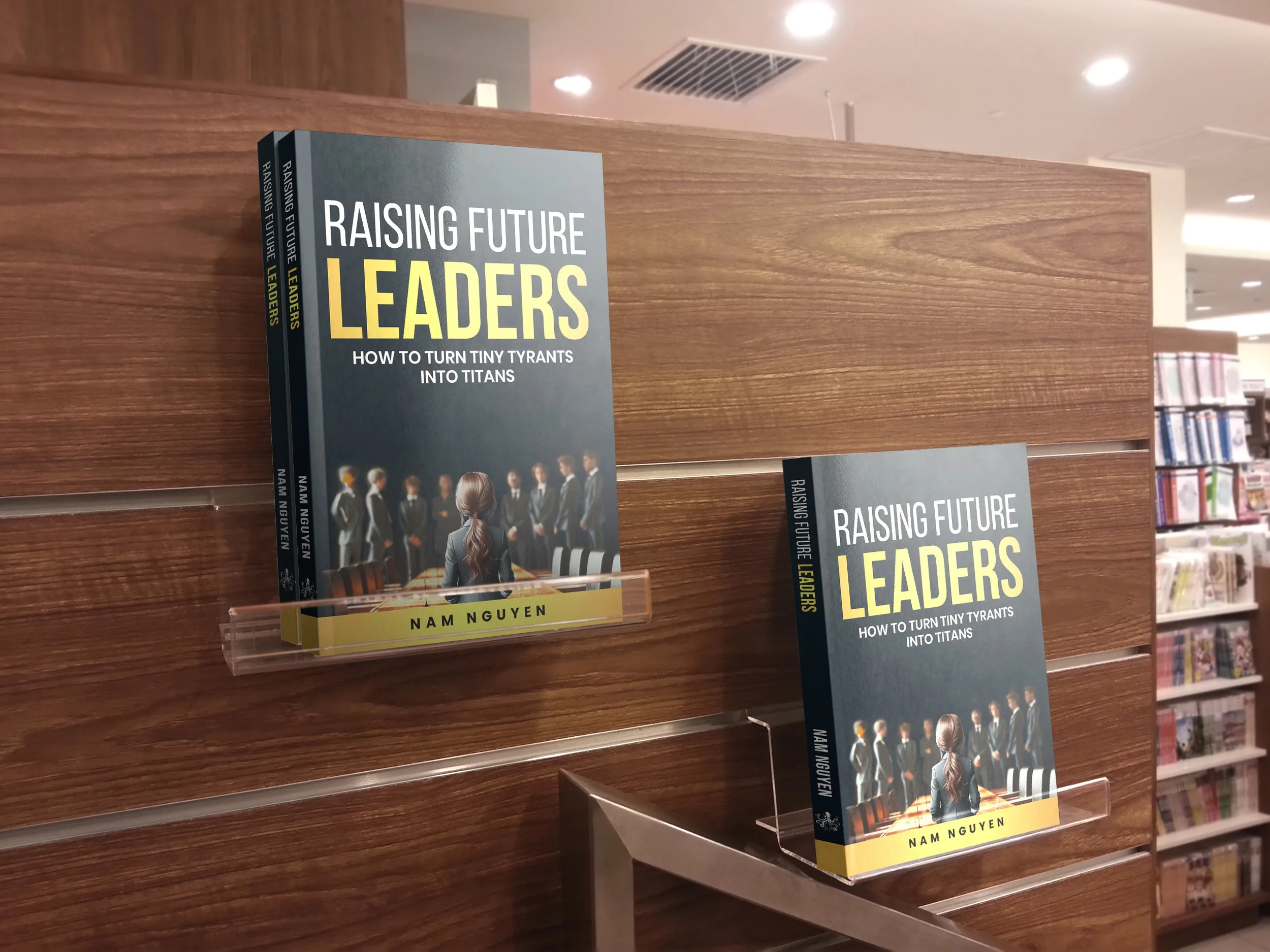
Raising Future Leaders explores how leadership begins at home.
Perfect Parents Don’t Exist looks at growth through the imperfections of family life.
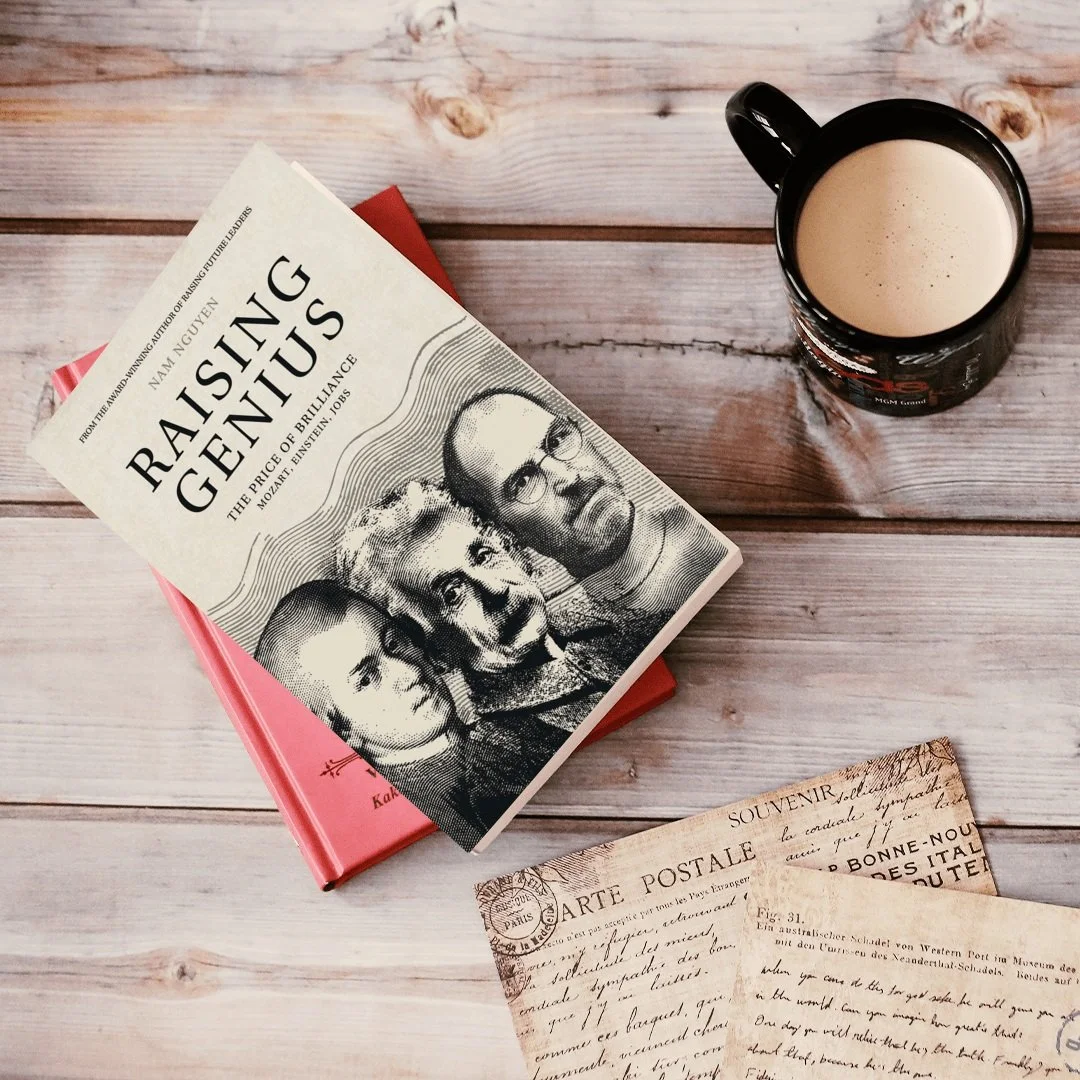
Raising Genius examines what extraordinary childhoods can teach us about talent—and its cost.
KIN takes the question further, tracing how childhood and parenting have helped shape civilization itself.
Different books. One continuing inquiry:
How does the way we raise the next generation shape what comes next?


Selected Writing & Contributions
The AI Journal
Parenting the Machine: Leadership Lessons for the Age of AI
An essay exploring what parenting can teach leaders about AI governance—from values and boundaries to progressive trust and accountability.
The Decision Lab
The Sheep in the Stock Market: How Herd Behavior Shapes Investment Trends
An exploration of how social proof, information cascades, fear, and cognitive bias influence collective financial decisions.
Psychologist Brief
7 Longitudinal Study Findings That Changed How Professionals Work With Children and Families
Nam contributed an expert perspective on how early self-control, developmental environments, and long-term outcomes can change the way we think about parenting and policy.
Connect
I love hearing from readers, parents, and thinkers who care about how we raise the next generation.